Facing Steam issues or upgrading your PC? This comprehensive guide reveals how to reinstall Steam without the frustrating process of redownloading your entire game library. Learn essential backup strategies, step-by-step uninstallation, and seamless game restoration. Many US gamers, balancing careers and family, find their precious gaming time often interrupted by technical glitches. With over 87 percent of US gamers regularly dedicating 10 plus hours weekly to their passion, optimizing performance and safeguarding game data is crucial. This article provides practical, actionable advice to help you maintain your digital investments, ensure smooth gameplay, and get back to enjoying your favorite titles faster, all while navigating common pain points and maximizing your system's efficiency for an uninterrupted, enjoyable gaming experience that truly fits your busy lifestyle. Discover insider tips for a worry-free Steam refresh today.
Top 5 Natural Questions about Reinstalling Steam Without Losing Games
1. Can I reinstall Steam without redownloading all my games?2. How do I backup my Steam game files before reinstalling the client?3. What files are important to save when reinstalling Steam to keep game progress?4. What's the process for reinstalling Steam on a new SSD while keeping my games?5. Will a Steam reinstall affect my game settings or saved data?
7 Essential Questions for a Smooth Steam Reinstall
Q1: What exactly is the SteamApps folder and why is it crucial for game backup?
A: The SteamApps folder is the primary directory where Steam stores all your downloaded game data. It contains subfolders for each game, making it crucial because copying this folder to an external drive or another location allows you to preserve your entire game library, avoiding the need to redownload hundreds of gigabytes when reinstalling Steam.
Q2: Can I just copy my entire Steam installation folder to a new drive and expect it to work?
A: While you can copy the entire folder, it's not the recommended or cleanest method. Steam relies on registry entries and specific file paths. A better approach is to back up the 'SteamApps' and 'userdata' folders, perform a clean reinstall of the Steam client, and then restore these folders to the new installation. This ensures proper integration and avoids potential issues.
Q3: What's the benefit of verifying game file integrity after reinstalling Steam?
A: Verifying game file integrity is a critical post-reinstallation step. It scans all your game files, compares them to Steam's official versions, and downloads any missing or corrupted components. This ensures your games run smoothly, free from errors that might have occurred during the backup, transfer, or initial installation process, preventing crashes and performance issues.
Q4: How do I handle game save files that aren't stored in the SteamApps folder or synced via Steam Cloud?
A: For game save files not covered by Steam Cloud or located outside 'SteamApps', you'll need to manually locate and back them up. Common locations include your 'Documents' folder, 'AppData' (Local, Roaming, or LocalLow), or specific publisher folders. A quick search for '[Game Name] save file location' usually provides the precise path, ensuring your progress is safe.
Q5: Is it safe to delete the remaining Steam folder after uninstalling the client from Control Panel?
A: Yes, it is generally safe and often recommended to delete any remaining files in the original Steam installation directory after performing a proper uninstall via the Control Panel or Settings. This ensures a truly clean slate, removing any residual corrupt files or configurations that might interfere with a fresh installation, provided you've already backed up your 'SteamApps' and 'userdata' folders.
Q6: What if my internet is slow? Is this method still worth it compared to a full redownload?
A: Absolutely! If you have slow internet, this method is even more valuable. Redownloading a large game library could take days or even weeks. By backing up and restoring your 'SteamApps' folder, you only need to download the relatively small Steam client and any minor update files, drastically reducing the required internet bandwidth and saving immense time and frustration.
Q7: Can I use this method to move my Steam games between different operating systems (e.g., Windows to Linux)?
A: While the general principle of backing up 'SteamApps' remains, directly moving Windows-installed games to a Linux Steam client (or vice-versa) won't work seamlessly. Games are compiled for specific operating systems. You'll need to reinstall the game via Steam on the new OS. However, you might be able to transfer save files manually if the game supports cross-platform saves, so always check game-specific forums for details.
Hey fellow gamers! Ever been there? Your Steam client is acting up, games are crashing, or maybe you're just doing a fresh Windows install to boost performance. The thought of reinstalling Steam is often followed by a shiver down the spine: “Oh no, not another 500GB download!” In the US, where an incredible 87% of adults game regularly, often balancing busy jobs and family life, our gaming sessions are precious. We spend an average of 10+ hours a week unwinding, competing, or exploring vast digital worlds, and the last thing we need is a multi-day redownload saga.
As busy adults, we value efficiency and problem-solving over endless troubleshooting. This month, performance optimization and seamless transitions between hardware setups are big topics in the gaming community. Many of us are looking for ways to maximize our limited gaming windows, whether that's diving into a new social co-op game, catching up on an RPG, or mastering a new esports title. The good news is, you absolutely can reinstall Steam without losing your entire game library or your precious save files. This guide is your ultimate toolkit, designed to get you back into the action quickly and effortlessly. We'll walk through exactly how to reinstall Steam without losing your games, ensuring your gaming life stays uninterrupted.
Why would I need to reinstall Steam in the first place?
There are several common reasons why a gamer might consider reinstalling Steam. Often, it's about resolving persistent software glitches that simple restarts or cache clears can't fix. You might experience frequent crashes, download errors, or games failing to launch. Another popular reason is upgrading your operating system or moving your Steam library to a new, faster SSD. Sometimes, a full reinstall is the cleanest way to fix corrupt files or performance issues that have accumulated over time, especially for those of us who have been using Steam for years and accumulated vast game libraries.
Is it really possible to reinstall Steam without losing game data?
Absolutely, yes! Steam is designed in a way that separates its core client files from your actual game data. Your game files, which make up the bulk of your storage, are typically stored in the 'SteamApps' folder within your Steam installation directory. By backing up this specific folder (and a few other crucial files), you can effectively uninstall the Steam client, resolve any underlying issues, and then reinstall it, pointing it back to your existing game library. This method saves you from the tedious and bandwidth-consuming process of redownloading hundreds of gigabytes of game data.
How do I back up my Steam games before a reinstall?
Backing up your games is the most critical step in this entire process. Thankfully, it's straightforward. The primary method involves copying your 'SteamApps' folder, which contains all your downloaded games, to a safe location. This could be an external hard drive, a different internal drive, or a large cloud storage solution. Many gamers, especially those juggling life and gaming, find external drives the most reliable for large game backups.
- Locate your Steam installation directory: By default, this is usually
C:
ogram Files (x86)	eam
. - Identify the 'SteamApps' folder: Inside your Steam directory, you'll find a folder named 'SteamApps'. This is where all your game data resides.
- Copy 'SteamApps' to a safe place: Simply copy the entire 'SteamApps' folder to your chosen backup location. Depending on the size of your library, this could take a while.
Remember, this method ensures you don't have to redownload the massive game files again.
What other crucial files should I save before uninstalling Steam?
While 'SteamApps' covers your game installations, a few other files are essential for a smooth transition, especially for settings and login data. Ignoring these can lead to minor inconveniences like re-entering your login details or reconfiguring your download regions.
- 'userdata' folder: This folder, also found in the main Steam directory, contains your specific Steam account data, including screenshots, custom controller configurations, and some game-specific settings. Copy this folder alongside 'SteamApps'.
- 'ssfn' files: These are security files (e.g., ssfn1234567890) that help Steam remember your login on that specific computer, preventing repeated Steam Guard prompts. Copy any files starting with 'ssfn' from your main Steam directory.
- Optional: game save files: While many modern games use Steam Cloud Sync, ensuring your save files are backed up locally is always a good practice, especially for older or indie titles. These are often located in your 'Documents' folder, 'AppData' (Local, Roaming), or directly within the game's installation folder. A quick web search for 'game name save file location' will usually provide the exact path.
What are the exact steps to uninstall Steam correctly?
Once your critical files are safely backed up, you can proceed with uninstalling the Steam client. It's important to do this properly to avoid leaving behind unnecessary registry entries or residual files.
- Close Steam completely: Ensure Steam is not running in the background. Check your system tray and task manager to confirm.
- Open Control Panel or Settings: Go to 'Programs and Features' (Windows 7/8/10) or 'Apps & Features' (Windows 10/11) in your system settings.
- Uninstall Steam: Locate 'Steam' in the list of installed programs, right-click (or select it) and choose 'Uninstall'. Follow any on-screen prompts.
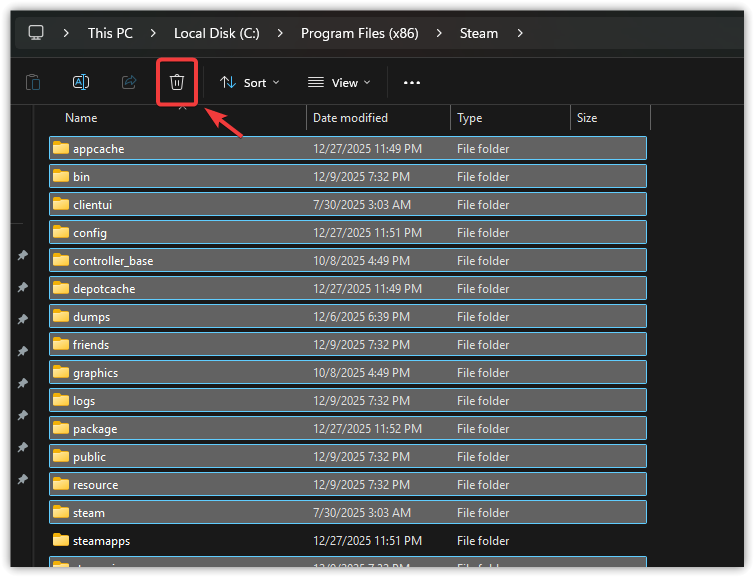
- Delete remaining Steam folder (optional but recommended): Even after uninstalling, some residual files might remain in the original Steam installation directory (e.g.,
C:
ogram Files (x86)	eam
). If you've backed up 'SteamApps', 'userdata', and 'ssfn' files, you can safely delete this entire folder for a completely clean slate. If you plan to simply move 'SteamApps' back to the *same* location, leave it, but deleting ensures no corruption lingers.
How do I reinstall Steam and restore my games?
With Steam uninstalled and your backups ready, reinstalling and restoring your games is the final, rewarding step.
- Download the Steam client: Visit the official Steam website (store.steampowered.com) and download the latest Steam installer.
- Run the installer: Install Steam, preferably to the *same drive letter* as before. The default location is generally recommended unless you have a specific reason to change it.
- Launch Steam once: After installation, launch Steam and let it perform its initial updates and setup. Log in with your account.
- Exit Steam completely: Once logged in, immediately close Steam from the system tray.
- Restore your files:
- Navigate to your *new* Steam installation directory.
- Copy your backed-up 'SteamApps' folder into this new directory, overwriting the empty 'SteamApps' folder that the fresh install created.
- Copy your backed-up 'userdata' folder into the new directory, overwriting if prompted.
- Copy your backed-up 'ssfn' files into the main Steam directory.
- Relaunch Steam: Steam should now launch and recognize your games. You might notice your library showing all your titles as 'Installed'.
- Verify game integrity: For each game, it's highly recommended to right-click on it in your library, go to 'Properties' -> 'Installed Files' -> 'Verify integrity of game files'. This process will ensure all files are correct and download any small missing or corrupted components without redownloading the entire game.
What if my games are on a separate drive or multiple drives?
Many US gamers with extensive libraries utilize multiple hard drives or SSDs for their games. If your Steam games were on a separate drive (e.g., D: eamLibrary), the process is even simpler because the game files were already separate from the core Steam client. After reinstalling Steam to your primary drive (e.g., C: ogram Files (x86) eam), you simply need to tell Steam where your existing game library folders are located.
- Install Steam: Install the Steam client to your main C: drive as usual.
- Launch Steam and log in.
- Go to Steam Settings: Click 'Steam' in the top-left corner, then 'Settings'.
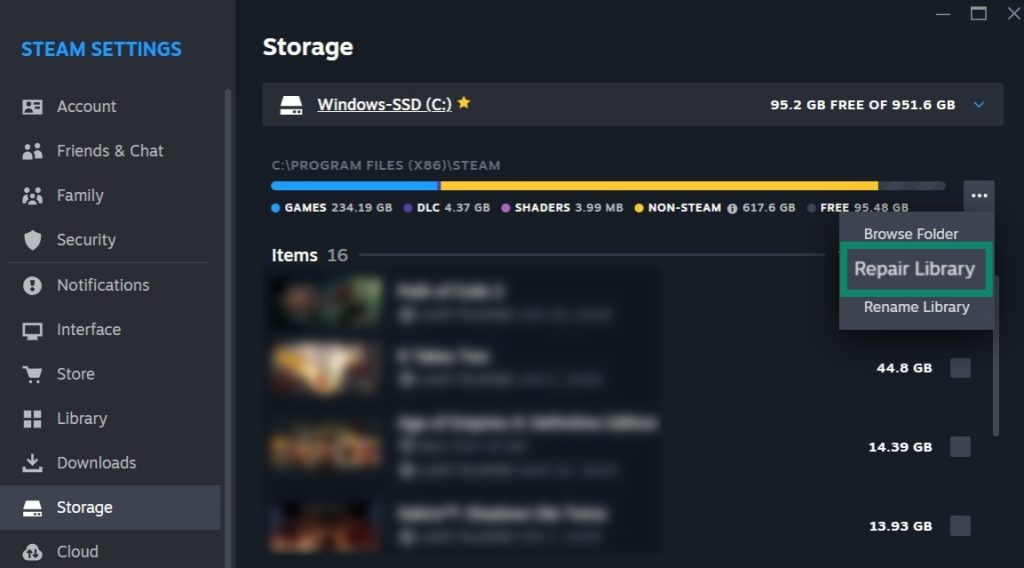
- Navigate to Storage: In the 'Settings' menu, go to the 'Storage' tab.
- Add a new drive: Click the '+' button next to your existing library drives.
- Select your existing game drive: Browse to the folder on your D: drive (or whatever drive) where your 'SteamLibrary' or 'SteamApps' folder is located (e.g.,
D: eamLibraryorD: eam eamApps). Select this folder. - Scan for games: Steam will scan the selected folder and automatically detect all the installed games.
- Verify game integrity: As a final step, verify the integrity of files for each game to ensure they're fully functional.
Are there any common pitfalls to avoid when reinstalling Steam?
Even with the best intentions, a few missteps can complicate the process. Being aware of these can save you headaches and precious gaming time.
- Not closing Steam fully: If Steam or any of its background processes are still running, the uninstallation might fail or leave behind corrupted files. Always double-check your task manager.
- Forgetting to back up 'userdata' or 'ssfn' files: While not critical for game functionality, forgetting these means re-logging in and re-configuring some settings, which can be an annoyance for busy gamers.
- Copying files to the wrong location: Ensure 'SteamApps' goes into the main Steam directory, and not, for example, directly into 'Common'. The exact path is important for Steam to recognize it.
- Not verifying game files: This step is often overlooked but crucial. Verification checks for missing or corrupted files that might have occurred during the backup or transfer, ensuring your games run flawlessly.
- Antivirus interference: Sometimes, overly aggressive antivirus software can interfere with Steam's installation or file verification process. Temporarily disabling it during installation might be necessary, but remember to re-enable it afterward.
How can I optimize Steam after reinstalling for better performance?
After a fresh reinstall, it's the perfect opportunity to set Steam up for peak performance, ensuring your gaming experience is as smooth as possible. For gamers who prioritize skill-building and competitive play, every frame matters.
- Set download region: In Steam Settings > Downloads, select a download region geographically close to you for faster download speeds. This is crucial as global gaming trends show faster internet access directly correlates with higher engagement.
- Clear download cache: Periodically clear your download cache (Settings > Downloads) to resolve potential download issues and free up space.
- Enable shader pre-caching: (Settings > Shader Pre-Caching) This allows Steam to download and pre-cache Vulkan and DirectX shaders before you launch a game, reducing in-game stuttering.
- Manage startup options: Consider disabling 'Run Steam when my computer starts' (Settings > Interface) if you prefer to launch Steam manually, saving system resources.
- Prioritize game installs: If you have games on different drives, ensure your most frequently played or performance-intensive games are on your fastest SSD.
These small tweaks can make a big difference, allowing you to maximize your gaming time, whether you're exploring the latest VR experiment or enjoying a cozy game with friends. This month's trends continue to highlight the importance of seamless social play and minimal technical friction.
FAQ Section
What is the 'Steam Library Folder' and why is it important?
The 'Steam Library Folder' is a designated directory (or multiple directories) where Steam stores your installed games. It's crucial because it allows you to organize games across different drives and is the primary location Steam searches for your titles. Backing up or relocating this folder is key to saving your games.
Can I move Steam games to a new PC without redownloading?
Yes, absolutely! By copying the entire 'SteamApps' folder (or specific game folders within it) from your old PC to the same location on your new PC's Steam installation, you can effectively transfer games without redownloading. Remember to 'Verify integrity of game files' afterward.
Will reinstalling Steam delete my game saves?
Generally, reinstalling Steam itself will not delete your game saves, especially if they are managed by Steam Cloud Sync. However, for older games or those without cloud support, manual backup of save files (often in 'Documents' or 'AppData' folders) is highly recommended to be safe.
What if Steam doesn't recognize my restored games?
If Steam doesn't automatically detect your games after restoration, go to Steam Settings > Storage, click the '+' icon, and add the folder containing your 'SteamApps' directory as a new Steam Library Folder. Steam will then scan and should recognize the games. Always follow up with 'Verify integrity of game files'.
How long does the entire reinstall process take?
The reinstallation of the Steam client itself is quick, usually just a few minutes. The longest part is backing up and restoring your 'SteamApps' folder, which depends entirely on the size of your game library and the speed of your storage devices. For a large library (500GB+), expect a few hours for copying.
Is it better to reinstall or repair Steam?
Repairing Steam (often done through the 'steam://flushconfig' command) can fix minor client issues by refreshing core files. However, for persistent problems, corrupt installations, or significant system changes like an OS reinstall, a complete reinstallation is generally more effective and provides a cleaner slate for optimal performance.
Do I need to backup mod files for my games?
Yes, if you use mods, they are usually stored within individual game directories inside 'SteamApps' or in separate folders that Steam doesn't manage (like Nexus Mods folders). You'll need to manually back up those specific mod folders if you want to preserve them and avoid reinstallation. Backing up the entire game folder within 'SteamApps/common' will often include mods, but always confirm the mod installation path.
After navigating through the intricacies of reinstalling Steam without sacrificing your digital collection, you're now equipped with the knowledge to tackle this common gamer challenge head-on. No more fearing the 'uninstall' button! This strategic approach not only saves you countless hours of redownloading but also ensures your game settings and precious save files are preserved, letting you get back to what matters: enjoying your games. As US gamers, we demand solutions that fit our busy lives, offering relaxation, fun, and optimal performance without the fuss. This guide delivers just that. What's your biggest gaming challenge when it comes to managing your PC? Comment below! We're always looking for ways to help our community game smarter, not harder.
Backup SteamApps folder, save user data, correctly uninstall Steam, reinstall client, restore game files, verify integrity, prevent redownloads, optimize Steam.
35


Recrent Steam . How To Reinstall Steam Without Games YouTube . Fixed Slow Download Speed On Steam ReInstall Steam 768x511 . How To Uninstall And Reinstall Steam Without Losing Games Apps UK Install Steam Option 768x406 . How To Reinstall Steam Without Losing Games Categories Saves



How To Move Steam Games To Another Drive 2026 Without Or . How To Uninstall And Reinstall Games On Steam 2026 Easy Guide YouTube . How To Clear Steam Cache On Windows And Mac In 5 Minutes How To Clear Steam Cache 16 1024x568 . How To Reinstall Steam Without Losing Games YouTube . How To Safely Reinstall Steam Games Learning Society Hqdefault



How To Fix Steam Quit On Mac MacOS Tahoe Supported Reinstall Steam Without Losing Game Data 3 . How To Uninstall And Reinstall Games On Steam Easy Guide YouTube . How To Recover Steam Games That Uninstalled 0 . Steam Uninstall Reinstall Games YouTube . How To Uninstall And Reinstall Steam Without Losing Games Apps UK Go Offline Option 1



Fix Steam Missing File Privileges Error 2025 Guide RoyalCDKeys Blob 97fd9a0e C408 4a05 9492 . How To Move Steam Games To Another PC Or Drive Without 2021 11 8 . How To Uninstall Steam From Your PC Or Mac A Complete Guide How To Download Steam 2 . How To Move Your Steam Library To Another Drive Without Losing Anything Mover Libreria De Steam A Otro Disco . Track Owned Games Across Steam Epic GOG Ubisoft Photo

How To Uninstall Steam Without Losing Saved Games YouTube . How To Reinstall Steam Without Losing Games Updated 2025 Step By Step . Reinstall Steam Without Deleting Games . How To Uninstall Steam Games And Reinstall Them Later Complete 2026 The Best Single Player Games 768x439 . Steam March 2026 Client Update Adds Hardware Specs To User Reviews Steam Client Mar 2026


How To Reset And Restore Steam Images. How To Transfer Steam Games Without Losing Data Or Como Transferir Juegos De Steam Sin Perder Datos 1 . How To Restore Altered Steam Games Images. How To Uninstall And Reinstall Steam Without Losing Games Apps UK Reinstall Steam 768x256 . How To Uninstall And Reinstall Steam Without Losing Games Apps UK Uninstall Steam Option


How To Fix Schedule 1 Not Launching Issue Explorer RAg74oPsyU . Windows Without Losing Steam Icons On Your Other Drives . If I Uninstall Steam What Happens To My Games Steam Games . 4 Picks How To Reinstall Windows Without Losing Games EaseUS Reinstall Windows Without Losing Games . Steam 9 TechCult KOREA Reinstall Steam